

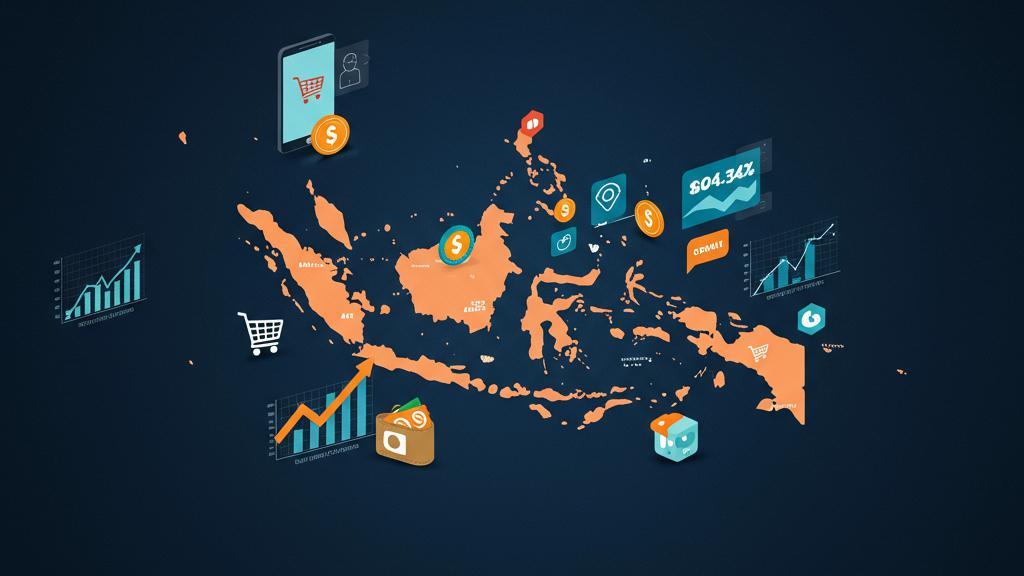
Southeast Asia is one of the world’s most compelling consumer growth regions, with private consumption across its six largest economies projected to approach US$5 trillion by 2035 (Bain, NielsenIQ). Yet one of the most expensive mistakes brands can make is treating ASEAN as a single market, or using Singapore as a shortcut to understanding all of it.
This guide breaks down the most important ASEAN consumer behaviour trends in 2026, examines what the data tells us about each major market, and explains what brands need to get right before entering or expanding across Southeast Asia.
Why Singapore Is a Benchmark, Not a Blueprint
Singapore is an effective starting point for an ASEAN strategy — but it is not a proxy for the region.
Compared with most ASEAN markets, Singapore has:
- A mature digital ecosystem and high purchasing power
- Sophisticated retail and payments infrastructure
- Wide adoption of international brands
- A consumer base accustomed to choosing between premium global options
Across the rest of ASEAN, consumers behave very differently based on income levels, digital access, cultural expectations, local competition, and price sensitivity. A proposition that converts in Singapore may need to be completely rethought in Indonesia or Vietnam.
The sophistication is not missing elsewhere — it is expressed differently.
Related reading: Singapore Consumer Behaviour: Post-Pandemic Trends and Insights →
Vietnam: E-Commerce Growth Meets a Rising Middle Class
Vietnam illustrates how quickly consumer behaviour can shift when economic development, smartphone penetration and e-commerce growth converge.
Key data points:
| Indicator | Figure |
| E-commerce market size (2024) | ~US$32 billion |
| YoY e-commerce growth | 27% |
| Digital economy share of GDP | ~18% |
| Middle-income population (2026 est.) | ~26% of population |
Source: U.S. International Trade Administration
Vietnamese consumers are increasingly exposed to international products and digital marketplaces while remaining strongly value-conscious. This creates a precise challenge: premiumisation is possible, but it must be earned.
Consumers may pay more for better quality, functional benefits, health and wellness, or product authenticity — but only when those benefits are made tangible and credible.
What this means for brands: Vietnam is not a lower-cost alternative to Singapore. It is a market of rising aspirations that rewards brands willing to demonstrate genuine, specific value.
Indonesia: Mobile-First, Halal-Conscious, and Massive {#indonesia}
Indonesia is Southeast Asia’s largest e-commerce market, accounting for more than half of ASEAN’s online business volume (U.S. ITA). Its digital economy is driven by a young, mobile-first population: over 355 million mobile subscriptions and a 4G subscriber base exceeding 270 million by early 2025.
For brands, this means mobile is not a secondary channel. The smartphone simultaneously functions as a discovery platform, marketplace, payment device, social network, and review source — all in a single consumer journey.
The halal dimension cannot be overlooked. Indonesia’s halal assurance framework continues to expand certification requirements — covering food, beverages, and from October 2026, additional categories including cosmetics, supplements and household products. For foreign brands, localisation in Indonesia goes far beyond translating advertising into Bahasa Indonesia. It involves:
- Product formulation and halal certification
- Local influencer strategy
- Mobile-first platform selection
- Distribution and after-sales localisation
Indonesia demonstrates more clearly than any ASEAN market that digital localisation and cultural localisation must work together.
Philippines: Social Commerce and the Power of Influence
The Philippines has developed one of ASEAN’s strongest relationships with social commerce. More than 97 million internet users primarily access e-commerce through smartphones (U.S. ITA) — and Filipinos are highly active on social platforms where influencers, live-selling, and peer reviews drive purchase decisions.
TikTok live selling, in particular, has become a mainstream discovery-to-transaction channel. In this environment, discovery, recommendation, entertainment, and purchase can all happen within the same app.
Brand loyalty is real — but conditional. The Philippines is a brand-conscious market, but loyalty depends on product quality, social proof, availability, price, influencer endorsement, and customer experience. Being globally recognised does not guarantee local preference.
For foreign brands, the challenge is building recognition and relevance simultaneously.
Thailand and Malaysia: Smart Premium isation Meets Sustainability
Thailand and Malaysia share a key 2026 consumer pattern: shoppers are becoming more selective about where a premium is justified, not less willing to spend.
This is the “smart premium” consumer. They may economise in everyday categories while continuing to invest in products that deliver clear personal or family benefits.
Thailand has a highly developed e-commerce ecosystem, with mobile-wallet adoption expected to reach 63% in 2025. PwC research highlights growing consumer attention to health, food safety, sustainability, and quality. A premium product must make its benefit immediately visible, consumers still expect demonstrable value.
Malaysia shows strong willingness to consider sustainable products, with PwC finding readiness to pay more for locally sourced, ethically produced, or traceable goods (PwC). However, price, convenience and trust remain barriers. Sustainability can support a premium — it cannot automatically justify one. Brands must show the connection between sustainable attributes and tangible consumer value.
Five Consumer Trends Connecting ASEAN in 2026
Despite significant country-level differences, five trends are reshaping consumer behaviour across Southeast Asia in 2026:
1. Cashless payments are changing the purchase journey
Digital payments — e-wallets, QR codes, real-time bank transfers, are now embedded in everyday urban consumer behaviour across ASEAN. Payment is no longer just the final transaction step: it influences loyalty programmes, purchase frequency, marketplace adoption, and promotions. Critically, the dominant payment methods vary by country. Payment strategy must be market-specific.
2. Health consciousness is becoming mainstream
Food, personal health, and home care remain resilient spending priorities even when consumers face financial pressure. Health increasingly influences everyday categories — ingredients, nutrition, functional benefits, personal care, and preventive wellness. But “health” means different things in different markets: what resonates in Thailand may not be the priority in the Philippines.
3. The experience economy is competing with products
Consumers are not just choosing between brands — they are choosing between products and experiences. Travel, dining, entertainment and leisure compete directly for discretionary spending. Understanding this broader share-of-wallet reveals why a consumer upgrades in one category while trading down in another.
4. Social commerce is collapsing the distance between discovery and purchase
Across ASEAN, social media increasingly combines entertainment, discovery, recommendation, comparison, and transaction into a single journey. Authenticity and social proof are becoming decisive. What consumers, creators, and communities say about a brand now shapes purchase decisions as much as — or more than — what the brand says about itself.
5. AI is entering the consumer decision journey
Consumers across Southeast Asia are beginning to use AI to compare products, search for alternatives, evaluate claims, and narrow purchase options. This creates a new question for brands: it is no longer enough to ask “can consumers find us?” Brands must increasingly ask “can consumers — and the AI tools helping them — understand why our product is relevant?” Clear product information, credible claims, and accurate specifications become competitive advantages.
Why Foreign Brands Fail in ASEAN — and How to Avoid It
The most common strategic error is copying a successful proposition directly from Singapore into neighbouring markets. It rarely works. The most frequent reasons:
| Mistake | What goes wrong |
| Using Singapore as an ASEAN proxy | Singapore consumers have distinct purchasing power and infrastructure |
| One regional proposition | A message that works in Thailand may not work in Indonesia or Vietnam |
| Treating localisation as translation | Language change ≠ proposition change |
| Ignoring local competitors | “Local heroes” — brands with cultural relevance, speed, and local knowledge — are a structural force in ASEAN (NielsenIQ, Bain) |
| Getting pricing wrong | Premiumisation is accepted, but only when the premium is justified |
| Researching after market entry | Consumer research is most valuable before decisions are made — not to validate a strategy already chosen |
Successful brands in ASEAN maintain a consistent brand identity while adapting product formulations, pack sizes, pricing, distribution, payment options, influencer strategy, and cultural references by market.
How to Research ASEAN Consumer Behaviour Effectively
Winning in ASEAN depends on building a research framework that is consistent enough to compare markets and flexible enough to capture local differences.
An effective ASEAN consumer research programme typically combines:
- Quantitative surveys — to measure awareness, usage, purchase intent, price sensitivity, and channel preference across countries on a common framework
- Qualitative research — focus groups and in-depth interviews to understand why consumers behave differently across markets
- Field audits and mystery shopping — to reveal what actually happens at the point of sale: product availability, pricing, competitor activity, and sales experience
- Digital and social listening — to map consumer journeys across search, social media, and marketplaces
- Secondary research — government publications, industry reports, and digital trend analytics to add market context
At Apeiron, we conduct consumer research across Singapore, Vietnam, Indonesia, the Philippines, Thailand, and Malaysia — using a regional framework designed to compare markets while capturing country-specific behaviour. Learn about our ASEAN research services →
The Strategic Takeaway
ASEAN’s consumer opportunity is significant. But capturing it requires knowing what should stay consistent across markets — and what must change.
The strongest ASEAN strategies combine:
Regional scale with local insight Global brand strength with local relevance Common research frameworks with country-specific methods Premium positioning with visible value
The long-term opportunity is real. But it will not be captured by brands that enter ASEAN on assumptions. It will be captured by those who understand why consumers choose — market by market, category by category, and channel by channel.
Think regional. Research local. Adapt intelligently.
Ready to Research Your ASEAN Market?
Apeiron conducts quantitative and qualitative consumer research across Singapore and Southeast Asia for local and international clients. Whether you are planning market entry, refining positioning, or tracking shifting consumer behaviour, we build research programmes to your specific brief.
Request a consultation → | View our market research services →
Sources: U.S. International Trade Administration (trade.gov), PwC Consumer Intelligence Series, NielsenIQ, Bain & Company, RinggitPlus Consumer Research

